How to Choose a Buggy for Dubai Desert Driving
Choosing the right buggy for a buggy dubai outing is less about chasing the biggest engine and more about matching the vehicle, route and driving style. Dubai terrain can shift from firm desert tracks to soft sand dunes, and a vehicle that feels easy on one stretch can feel demanding on another. A careful choice makes the drive calmer, safer and more enjoyable for everyone involved.
Start by deciding what kind of experience you want before looking at any vehicle. A short lap on a defined route asks for different features than a longer desert safari across open sand. Some riders want the challenge of handling a single-seater buggy, while others prefer a passenger buggy so two people can share the ride. Being clear about the purpose narrows the choice quickly and prevents a mismatch between expectation and terrain.
Set the route and riding style first
Think about where the drive will take place and how long it will last. Flat, packed tracks are forgiving and suit newer drivers. Soft dunes require more control, patience and a vehicle with enough power to climb without constant aggressive input. If the route includes tight turns, narrow tracks or uneven crests, maneuverability matters more than raw speed.
Group size also shapes the decision. A solo rider can focus on balance and line choice. Two riders need enough space, clear seating and a vehicle that remains stable with a passenger on board. Families or mixed-experience groups should favour predictable handling over a machine that reacts sharply to small steering inputs.
The time of day is worth considering too. Warm conditions can affect both driver comfort and vehicle performance, so plan around a pace that allows steady driving and regular pauses. A buggy suited to relaxed exploration often gives a better day than one chosen purely for speed.

Choose between single-seater and passenger buggy
A single-seater buggy puts the driver in full control of weight, steering and throttle. It can feel more responsive on sand dunes and is often easier to read because there is no passenger movement to account for. The trade-off is that one person carries all the attention, and there is no one else to share the experience directly.
A passenger buggy works well when two people want to ride together or when one rider is less confident. The extra weight can change how the vehicle climbs and turns, so the driver needs to take corners smoothly and avoid sudden moves. Seat comfort, legroom and secure seating become more important on longer laps and tours.
Whichever layout fits, check that seating feels secure before committing. The rider should be able to sit upright, reach controls naturally and stay braced over rough ground. Loose seating or awkward reach can turn a manageable route into a tiring one.
Match power and handling to the terrain
Power helps a buggy climb dunes and maintain momentum, but it is not the only measure of capability. A vehicle with manageable power and predictable handling is often easier to control than one that surges forward at the slightest throttle input. On sand, steady momentum matters. Too little speed can cause the buggy to bog down, while too much speed can make a crest difficult to read.
Pay attention to how the buggy responds at low and medium speed. Smooth acceleration is useful when moving over rippled sand or approaching a ridge. Steering should feel direct without being twitchy. Suspension should absorb small bumps without letting the vehicle feel unsettled.
If comparing options, ask how each buggy behaves on the sort of route you plan to take. A vehicle that performs well on fast laps may not be the best match for slow technical driving. The goal is control, not a brief burst of speed.
Browsing information through atvridedubai.com can help frame the comparison around the type of driving rather than appearance alone. Look for details that explain vehicle layout, route character and rider suitability, then match those points against your own plans.
Check safety gear and fit before you decide
Safety gear is part of the vehicle choice, not an afterthought. A helmet should fit snugly, sit level and stay in place without pressing painfully. Gloves can improve grip and reduce vibration. Eye protection matters in dusty conditions, especially when the route follows other vehicles.
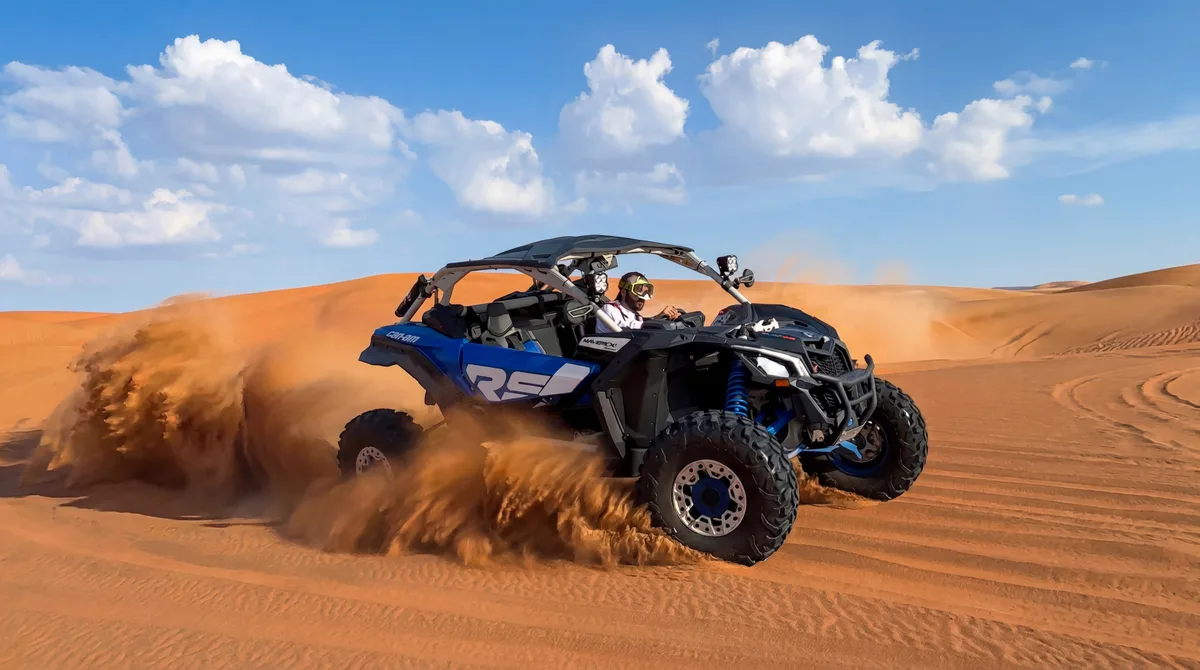
Seat belts or harnesses should be easy to fasten and adjust. They should hold the driver and passenger firmly without restricting normal movement. If a restraint feels loose, twisted or awkward, raise it before the ride begins. Comfort and security both matter because a rider who keeps shifting position can upset the buggy balance.
Clothing also affects control. Closed shoes with good grip are more practical than sandals. Light, breathable layers help in warm weather, while long trousers offer some protection from brush and sand spray. Loose scarves or dangling accessories can catch or distract, so keep them away from controls and wheels.
Understand the route rules and riding format
Laps and tours can feel very different. Laps may involve repeated sections with clear boundaries and faster transitions. Tours often cover varied terrain, with pauses and a slower overall rhythm. A first-time rider may find a structured route less stressful, while someone comfortable with off-road driving may enjoy a longer format with more varied sand conditions.
Before choosing, find out how the route is managed. Clear starting points, markers and stopping areas help riders understand where to go and when to slow down. Defined routes also reduce the chance of overlapping with other vehicles in unexpected places.
Ask how mixed abilities are handled. If beginners and experienced riders share the same outing, the pace should suit the least confident person. A buggy that is capable but calm will make that easier. Group riding also requires discipline around spacing, overtaking and stopping, so pick a format with clear expectations.
Look for clear operating information
Good decision-making depends on clear, practical information. A useful listing or enquiry should make it easy to understand what is involved: vehicle type, passenger capacity, route style, safety equipment and any basic requirements for riders. Vague descriptions make comparison hard and can hide important differences between options.
If something is unclear, ask a direct question before the day. Clarify whether a driver needs prior off-road driving experience, whether passengers are allowed on the chosen buggy, and how the route changes if conditions are windy or sandy. Clear answers are a better sign than broad promises.
When comparing the buggy dubai options available, keep notes on the points that matter to you. A simple comparison of seat count, route length, riding pace and safety gear can reveal which choice fits better than a quick look at engine size or appearance.
Make the final choice with comfort in mind
By this stage, the decision should be practical. Pick the buggy that fits the riders, suits the terrain and matches the route format. A confident choice usually feels balanced: enough capability for the sand, enough restraint for control, and enough comfort for the whole drive.
Do not overlook small details. Easy entry and exit, clear visibility, reachable controls and stable seating all affect the experience. On a desert safari, a rider who feels settled can focus on the track ahead rather than constantly adjusting position. That difference becomes more noticeable as the drive continues.
Finally, keep expectations realistic. Off-road driving on sand asks for patience, smooth inputs and respect for the route. The right buggy supports that approach. It does not remove the need for attention, but it makes good driving easier and helps the whole outing feel well matched from start to finish.